Why we discuss layout early
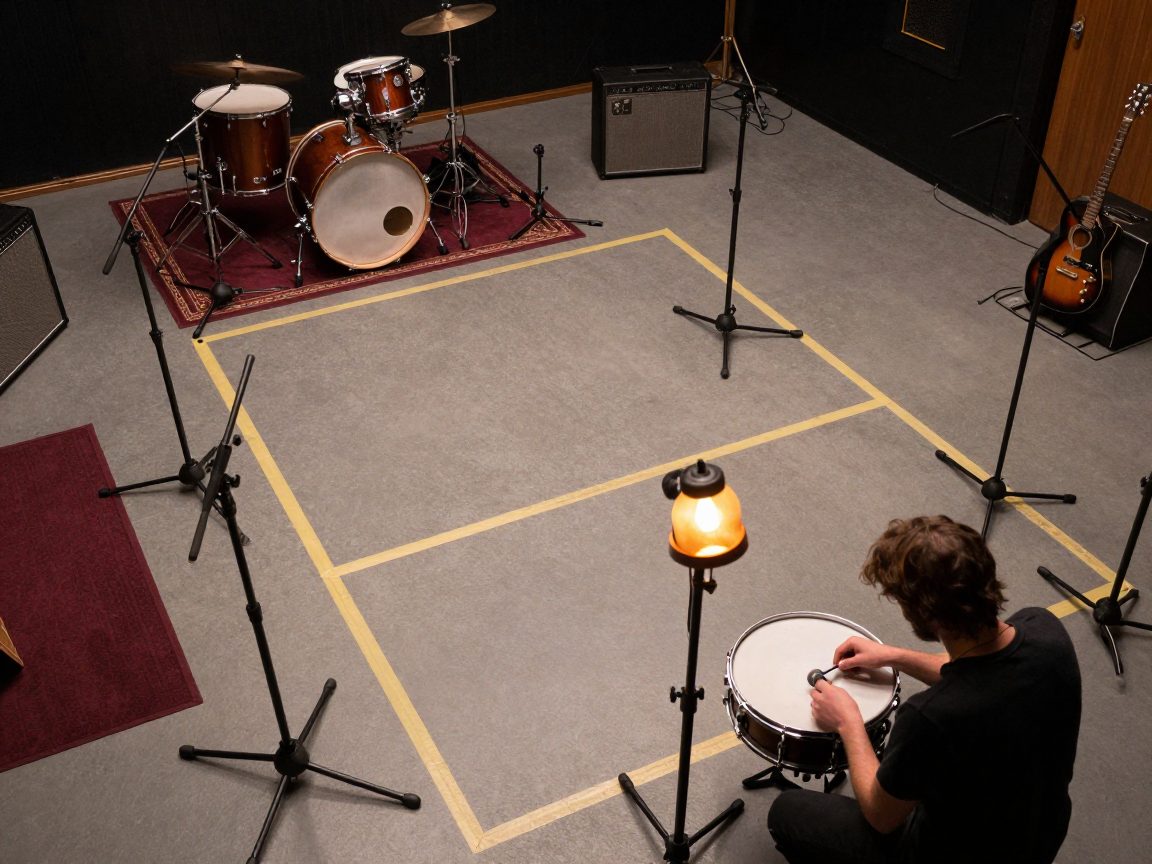
The live room is about 38 m² with space for drums, bass amp, guitar cabs and keys. With 24 desk inputs, routing is planned. Positions drive bleed, gobo placement and how many amp baffles we deploy.
Email a sketch or rehearsal photo via contact before booking so DI boxes and cab dividers are ready.
Drums as the anchor
Drums usually face the vocal booth glass, kick toward the engineer. We mic kick in/out, snare top and bottom, overheads and toms as needed — each mic counts toward headroom.
Share your tuning and damping setup from home. A kit that already sounds controlled saves fifteen minutes of ringing out on the day.
Bass: DI and amp
Bass often runs DI for clarity plus an amp in the corner for grit — common in Dutch pop and indie. Heavier genres may stay amp-only. State your preference in mail to [email protected].
Keep the cab out of the drummer’s bleed path when possible; a gobo simplifies comping for whoever handles stem mixing later.
Our team includes dedicated recording and mix engineers who know the rooms at Bilderdijkstraat 112 in Amsterdam. Share a rehearsal video link in your booking — not for judgement, but so we anticipate drum sizes and amp count.
Session files stay on our systems for 18 months; download stems after the mix pass even if you plan a later Mastering round. Losing a drive should not mean losing the only copy of your multitrack.
Guitars and keys
Two guitars usually mean two miked cabs, sometimes a room mic for air. Keys can be stereo DI; synths with amps get their own spot. High ceilings add natural ambience — we use it, not chaos.
Arrive with pedalboards patched; fresh batteries avoid hum mid-take. Mains are 230 V in the Netherlands — bring adapters for foreign power supplies.
Monitoring and click
Drummers often get a separate headphone mix; guitarists monitor from amps or in-ears you bring. Click on its own bus keeps metronome off overheads.
Guide vocals from the booth? With 2 iso booths we can route through the glass — budget extra setup minutes.
Time, rates and engineer
Live band recording is €118 per hour with engineer included, or €890 for eight hours. Mic setup and line check for a four-piece typically takes thirty to forty-five minutes — not “free” tracking time.
Book through contact with a 25% deposit. Free moves are possible until 5 days before — see terms.
Neighbours and levels
We are in a mixed residential block in Oud-West. Full blast all day is rarely needed — eighty percent of live energy often records better. Extreme genres? Talk to us first for shorter blocks and heavier isolation.
Tram 7 stops at Bilderdijkstraat; from the Bilderdijkstraat stop it is about a 3-minute walk to number 112. From Amsterdam Centraal, tram 7 towards Slotervaart takes roughly 12 minutes. By bike from Leidseplein it is about 8 minutes via Overtoom. — load heavy cabs via our street entrance; tell us about wide vans so we keep pavement clear.
Headroom and live gain staging
Tracking together means everyone plays at once — you cannot “fix it in the mix” if the snare clips on every mic. We set conservative preamp gain and listen to bleed before full takes. That is five minutes, not an hour.
Tell us which songs hit hardest; we do not start with the loudest tune while routing is still open. Dynamic bands keep headroom; heavier acts plan drum compression with the engineer upfront.
Floor plan snapshot
| Spot | Tip |
|---|---|
| Drums | Centre, snare toward booth glass |
| Bass | Corner, DI plus cab if wanted |
| Guitar | Gobo between cab and kit |
| Keys | DI at desk, low bleed |
Recording guide vocals separately? See vocal session checklist. Release loudness? Loudness for streaming covers targets.